Wednesday, 20 November 2019

Thursday, 14 November 2019
the storry of petscot
There is a kerosene lamp known in the Luanda language as tandoori. It burns like a candle and it gives off thick dark smoke that slowly causes a black coating on the roof of the house, the walls, the furniture and other household items. It is the commonest type of lamp used in poor homesteads in Uganda. Meanwhile, our forests are diminishing because about 95 per cent of the country’s households depend on firewood and charcoal for cooking. The use of lamps such as tandoori for lighting and firewood for cooking leads to household air pollution dangerous to human health. Nearly 20,000 young children die of indoor air pollution-related pneumonia annually in Uganda, while globally an estimated 3.5 million deaths every year are associated with the problem – mainly women and children in low-income countries1.
Currently, according to the government’s Rural Electrification Strategy and Plan 2013–2022, less than 5 per cent of Uganda’s rural population has access to hydroelectricity. This low level of electrification is an impediment to achieving the desired transformation, which includes the provision of cleaner and more efficient technologies for cooking and lighting in all households2.
During the civil war in our country (1980–1986) my wife, Mary, and I lived in Nairobi, Kenya, where we used electricity for lighting and other household purposes. As we prepared to return to Uganda when the war came to a close, we sold off the television, the cooker, the refrigerator and all our other electrical appliances, since we would not be able to use them in southern Uganda where we meant to set up a small farm and where we had no electricity.
Both Mary and I had grown up in homes without electricity and we knew what to expect, but not our children. When they saw their mother lighting the tadooba, one of them said, “Mama is lighting a small stove”. They had to see for the first time a charcoal flat iron used for pressing our clothes. They were alarmed to watch her laying the firewood and lighting the fire in the small grass-thatched shade that passed as our kitchen, fearing that it could catch fire and that she could even get burnt herself. It took all of us quite some time to get used to life without electricity.
In 2004, thanks to DANIDA, a Danish donor agency, and the government of Uganda, hydroelectricity was to be extended to neighbouring Rakai district, and our Member of Parliament, Gerald Ssendaula, announced that the transmission lines were to pass through our home area and that several villages including ours – Ngereko in Kisekka sub-county – were to benefit. The good news arrived when we were still burdened with our children’s college tuition fees and the construction of our present house.
Wednesday, 14 August 2019
Maths Week Challenge
Today I took part in the maths week challenge. I answered all of the questions correctly.


Friday, 2 August 2019
The life cycle of a butterfly
First stage of life cycle of a butterfly
A female butterfly lays eggs
A butterfly starts its life as an egg, laid by a female adult
butterfly after mating. Butterfly eggs vary in size and shape, but most
are surrounded by a protective hard shell.
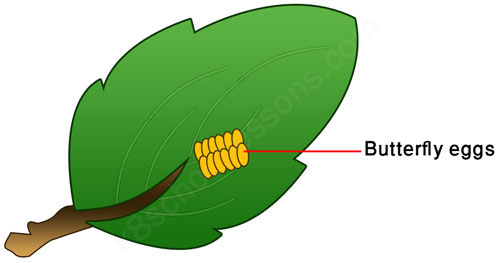
Example of butterfly eggs
Second stage of life cycle of a butterfly
Caterpillar hatches
A caterpillar develops within the egg and then eats its way out of
the shell. This stage of the butterfly’s life cycle is also called larva.
Caterpillar molts (sheds its skin)
A caterpillar spends all its time eating. As it grows,
the caterpillar becomes too large for its skin and molts (sheds
its skin) to make new skin. Depending upon the type of butterfly,
caterpillars molt four or five times.

Caterpillars spend all their time eating leaves
Third stage of the butterfly life cycle
Pupa and Cocoon
When the caterpillar reaches its final size it stops feeding.
The caterpillar wriggles and twists to gradually remove its old skin,
revealing a new protective skin called cocoon. Inside the cocoon, the
caterpillar changes into a worm like creature called pupa.
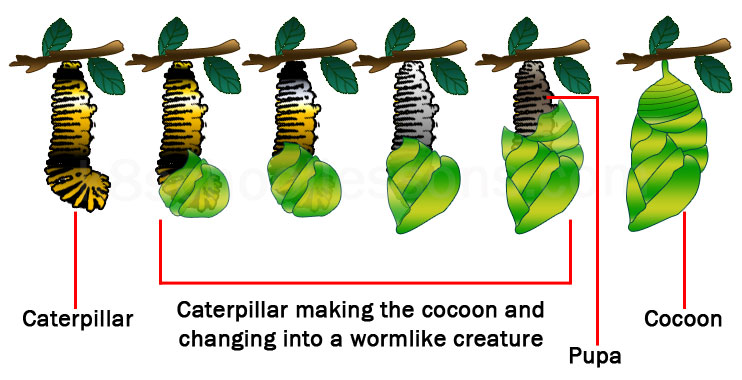
Steps of making the butterfly cocoon by the caterpillar

Example of a butterfly cocoon
Fourth stage of the butterfly life cycle
Adult butterfly
When the time reaches adulthood, the pupa changes into a butterfly
and leaves the cocoon. It pumps blood into its wrinkled wings and
expands them to their full size before flying away.
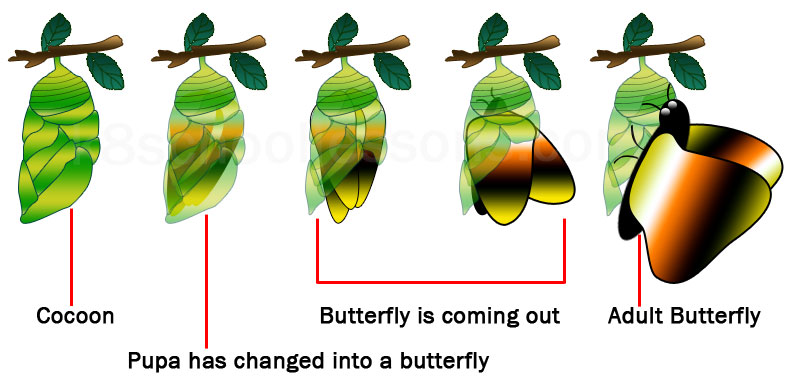
Pupa has turned into a butterfly inside the cocoon and slowly
coming out of it
Thursday, 1 August 2019
The Life Cycle Of A Mosquitoes
Life Stages of Aedes Mosquitoes
Eggs
Adult female mosquitoes lay their eggs on the inner, wet walls of containers with water, above the waterline. Mosquitoes generally lay 100-200 eggs at a time. Eggs are very hardy; they stick to the walls of a container like glue and can survive to dry out for up to 8 months— even over the winter in the southern United States. It only takes a very small amount of water to attract female mosquitoes. Bowls, cups, fountains, tires, barrels, vases and any other container storing water make for a great “nursery.”
Larva
Larvae emerge from mosquito eggs, but only after the water level rises to cover the eggs. This means that rainwater or humans adding water to containers with eggs will trigger the larvae to emerge. Larvae feed on microorganisms in the water. After moulting three times, the larva becomes a pupa.
Pupa
Pupae will develop until the body of the newly formed adult flying mosquito emerges from the pupal skin and leaves the water.
Adult •
After adult mosquitoes emerge: male mosquitoes feed on nectar from flowers and female mosquitoes feed on humans and animals for blood to produce eggs. • After feeding, female mosquitoes will look for water sources to lay more eggs. • Aedes aegypti only flies a few blocks during its life. Unlike other mosquito species, Aedes aegypti mosquitoes prefer to bite people. Aedes aegypti mosquitoes prefer to live near people. They can be found inside homes, buildings, and businesses where window and door screens are not used or doors are left propped open.
Thursday, 25 July 2019
Subscribe to:
Posts (Atom)